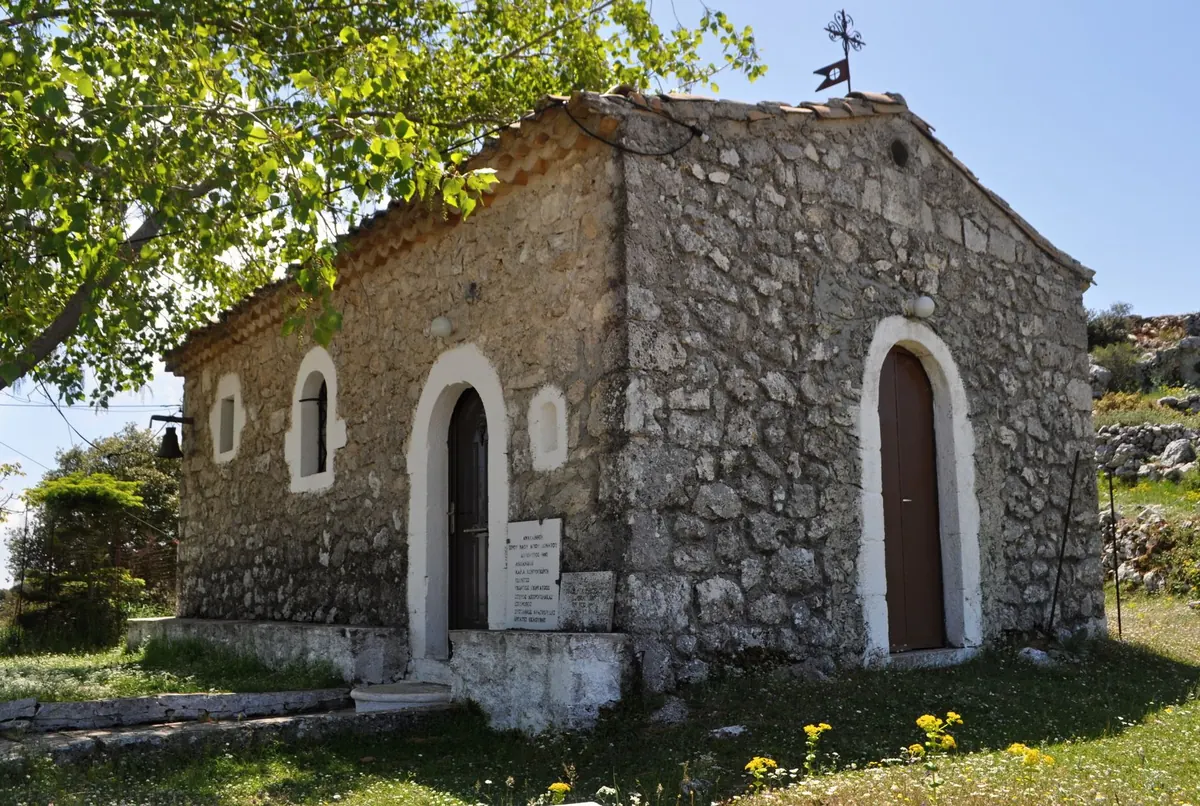

Victorian Chapel Revivals: Spotting 19th-Century Details Through Your Lens
Victorian chapels hide their best details in floors, ironwork and window tracery. Here is how to recognise them and photograph them well.
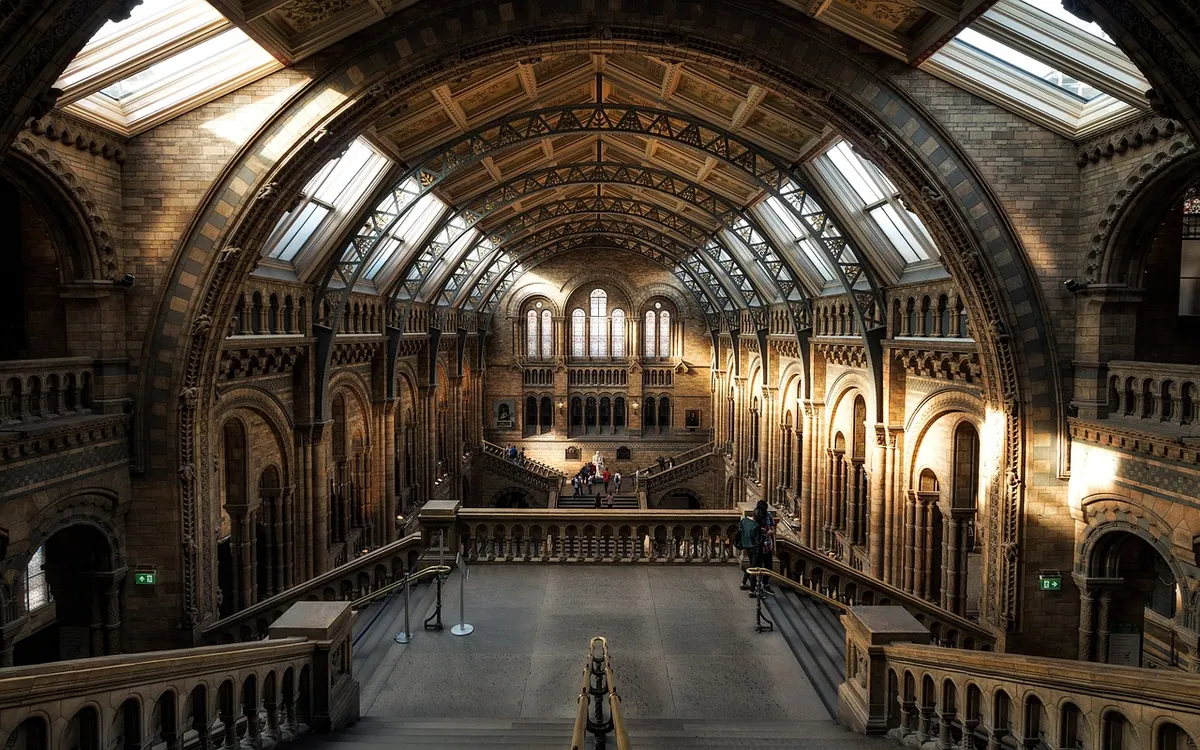
A Victorian chapel rarely gives up its best details at the door. You come in for the light and end up crouching over the floor: red and buff tiles laid in a repeating quatrefoil, ironwork so slender it looks drawn in pencil, a window whose only ornament is the stone tracery holding the glass. Between roughly 1840 and 1900, congregations rebuilt in stone, brick and coloured glass, borrowing medieval forms and filling them with catalogue-made detail.
For a photographer, one building can hold a dozen separate subjects. The skill is knowing which details are worth stopping for, and how to light them without hauling a studio into a pew.
What the Victorians Were Reviving
The word "revival" covers several impulses, and they do not photograph the same way. The Anglican Gothic Revival, pushed along by Pugin's writing and by the Cambridge Camden Society from 1839, aimed at correctness: pointed arches, deep chancels, stained glass in a medieval manner. Nonconformist chapels took a different route. Many kept a preaching-box plan, a pulpit at the centre of a horseshoe of galleries, and spent their architectural money on the facade, the gallery fronts and the ceiling.
Read the plan before you read the ornament. If the galleries sit on cast iron columns with slim foliage capitals, you are in a chapel of the 1860s or later, and the ironwork is your subject. If the chancel is deep and tiles march up to an alabaster reredos, the building followed the ecclesiological rulebook, and the floor is where the money went.
Encaustic Tiles: the Floor Worth Kneeling For
Inlaid clay tiles in red, black, buff and cream are the most generous Victorian detail in any building. Firms such as Minton and Maw & Co. supplied them by the thousand in standard patterns that could be laid as borders, panels and processional paths. You will find them in porches, aisles, chancel steps and baptistries, and in chapels often as tile panels carrying a text.
Making tiles read on camera
- Get low. Knee height or lower turns a floor into a receding pattern instead of a flat carpet.
- Use raking light. A window at the far end of the aisle throws shallow shadow across the glaze and reveals the inlay. Flat overhead light kills it.
- Kill the glare. A polarising filter cuts reflections from polished tile. On a phone, change your angle until the sheen slides off the pattern.
- Set your white balance. Red tiles under greenish daylight go muddy. Balance from a neutral patch of stone or plaster instead.
- Let the wear show. A footpath polished by a century of boots is evidence that the floor is old, not a defect to fix in editing.
Ironwork, Cast and Wrought
Iron is where a chapel shows off its engineering: cast columns carrying the galleries, wrought iron in communion rails, gates, lamp brackets and the scrollwork of screens. Look at the smaller pieces too, including hinge straps, ventilation grilles set into the floor or wall, and radiator covers.
Iron is dark and matte, so it photographs best as a silhouette. Put a bright window behind the rail or grille, expose for the glass, and the pattern appears as a shape against light. Focus manually, support the camera, and stop the aperture down a little to keep thin bars crisp. Watch the paint: ironwork may carry a century of cream, green and black, and the chipping is often the most honest record of a building's life.
Tracery: Reading the Window Before You Expose It
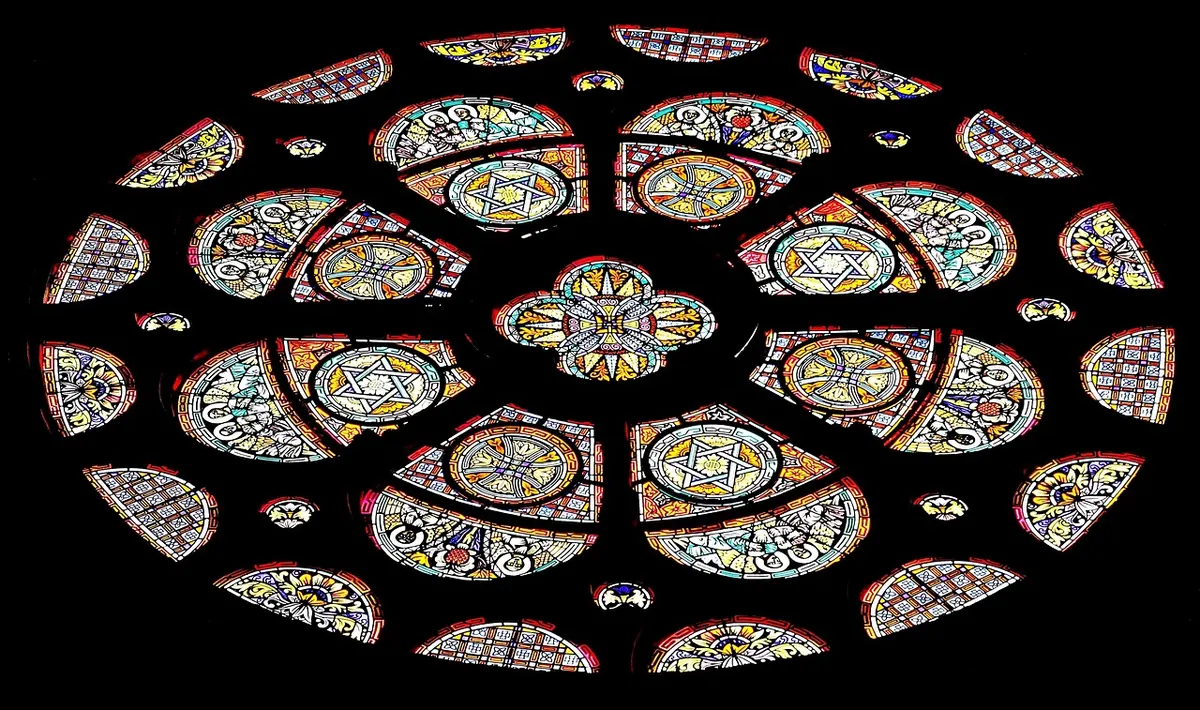
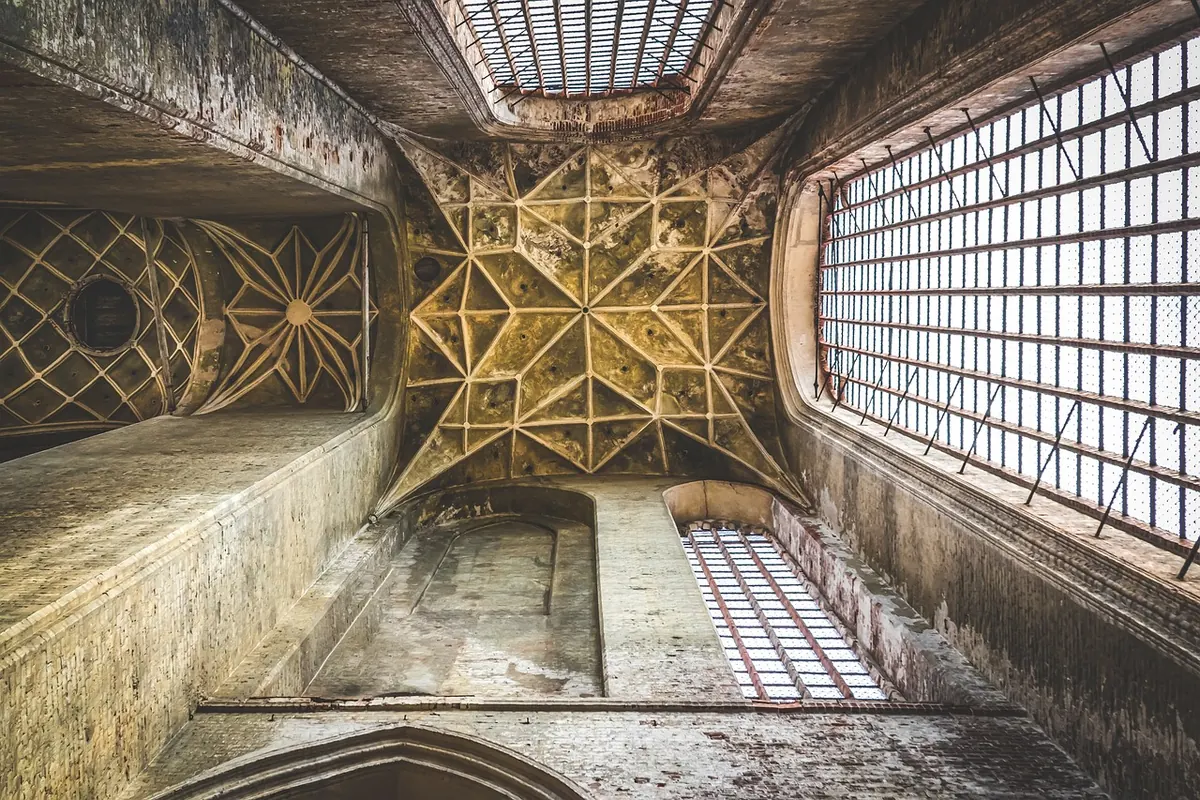
Tracery is the stone framework that divides a window into lights and fills its head with pattern. Victorian architects worked in three broad modes, and the mode is a rough date stamp:
- Plate tracery: shapes cut through a solid stone plate, heavy and early in feel.
- Geometric tracery: circles, trefoils and quatrefoils in a regular grid, popular from the 1840s onwards.
- Curvilinear tracery: flowing, flame-like forms, favoured later in the century.
Expect plenty of mixing, and do not assume every chapel window is Gothic; many nonconformist buildings used round arches and simpler glazing bars. On camera, the glass is brighter than anything else in the room. Take a spot reading from the brightest part of the glass, or bracket two stops either side and blend later. A bright, diffuse sky gives the most even colour; direct sun makes the glass glow while the interior goes black.
Other Details Worth the Frame
- Polychrome brick and terracotta: banded gault and red brick, moulded terracotta capitals, patterned string courses.
- Stencilled walls and painted texts: often buried under later emulsion, sometimes surviving in vestries and stairwells.
- Pitch pine pews and bench ends: the grain, and the shine worn into armrests.
- Brass and copper fittings: gasoliers converted to electricity, door furniture, collection plates. Polished metal reflects you, so shoot from an angle.
- Leaded lights with coloured quarries: the small diamonds and squares that fill otherwise plain chapel windows.
- Memorial tablets and inscriptions: useful for dating a space, and often the best-lit thing on the wall.
Shooting a Set, Not a Series of Snapshots
A simple structure turns a visit into a story. One wide establishing frame from the back, one medium view down an aisle or across the galleries, three or four details, and one closing frame at the door looking back. Shoot each detail twice, square-on and at an angle, and choose later.
Before you press the shutter on a detail, name it. If you cannot say whether a tile panel is original or a later replacement, the photograph still stands, but the caption will be weaker. Look for the clues: machine-cut tracery and catalogue tiles are usually original; secondary glazing, surface wiring and polyurethane varnish are not.
Field Notes for the Next Visit
Ask before you set up a tripod, and ask again if you want to cross a corded-off area. Avoid service times and the hour before a wedding. Aisles are often uneven or sloped, so a beanbag on a pew or a low tripod beats hand-holding at a quarter of a second.
Keep your hands off the ironwork and the tiles; skin oils and grit do neither any favours. Watch for wet floors after cleaning and loose tiles at the edges of paths. If the building is heated, a radiator will sit somewhere in your frame, so use it as foreground or step past it. If someone offers to switch the lights on, say yes and take both versions, then compare at home.
Leave a donation and sign the visitors' book. Chapels that are noticed are the ones that get looked after.
Photo: PublicCo / Pixabay