
Romanesque or Gothic? How to Read Chapel Architecture Before You Shoot
Round arches or pointed ones? Learn to read the arches, vaults and windows of a chapel so your compositions suit Romanesque and Gothic buildings.
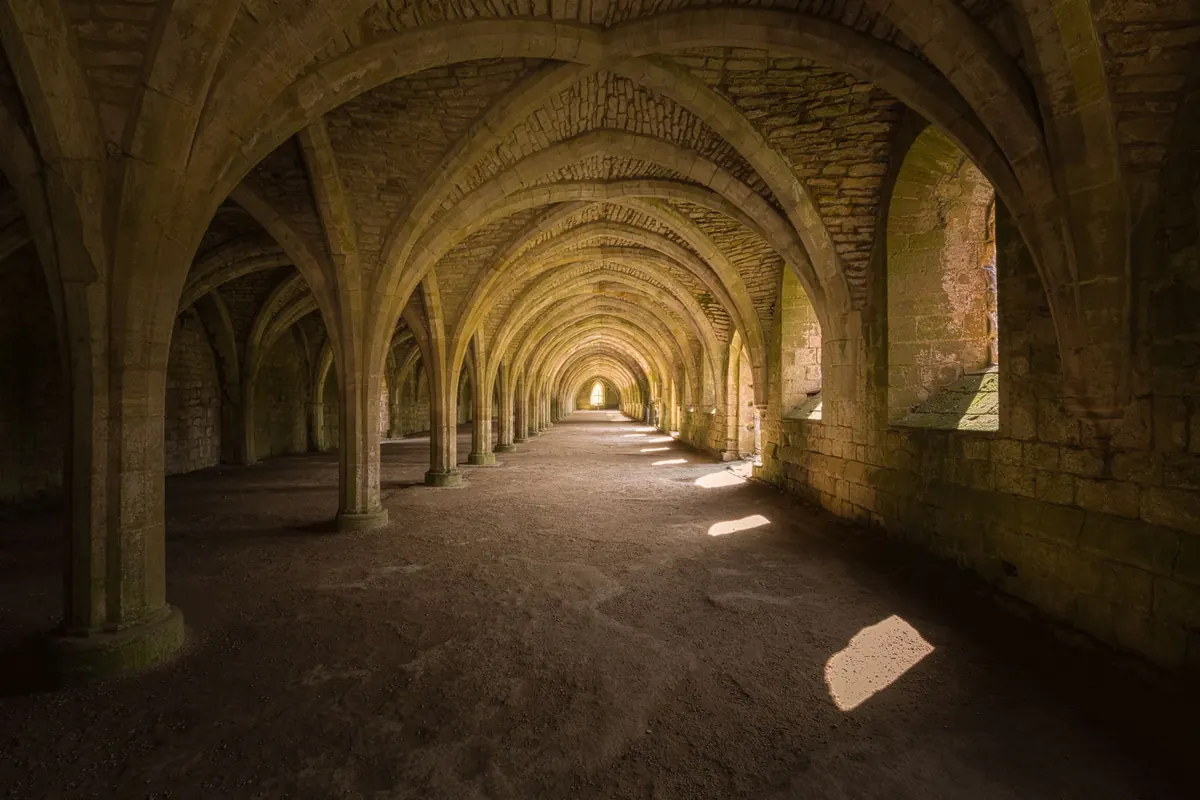
You step into a chapel and the building starts making demands. Where you stand, which lens you mount, whether you shoot straight up or level across the pews — the architecture has already decided half of that. You don't need a degree in art history to read it. Romanesque and Gothic stonework announce themselves in a handful of visible features, and once you can spot them in the first thirty seconds, your compositions stop fighting the building and start working with it.
The Arch Tells You Almost Everything
If you learn one diagnostic feature, make it the arch. Everything else tends to follow from it.
Round arches: Romanesque
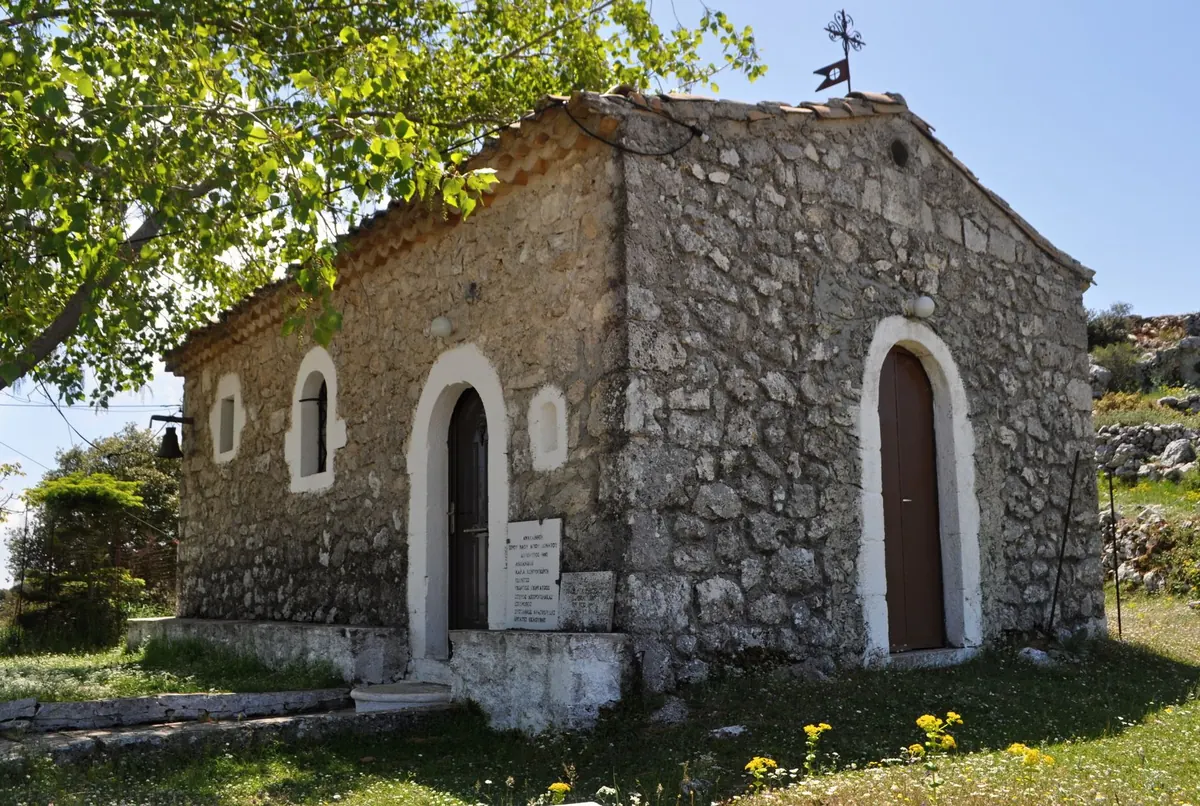
A semicircular arch, drawn with a compass from a single centre point, is the signature of Romanesque building — roughly the eleventh and twelfth centuries in western Europe. Look at the doorway, the window heads, the arcade between nave and aisle. If they're all half-circles, you're in Romanesque work. St John's Chapel in the Tower of London is a compact example: thick walls, small openings, arches sitting on squat columns with plain cushion capitals.
For a photographer, that means dark, grounded interiors. The mass of the walls dominates, light arrives in modest slices, and the space is usually wider than it is tall. Compositions that run level along the nave, or that read the rhythm of repeated arches, work better here than dramatic upward tilts.
Pointed arches: Gothic
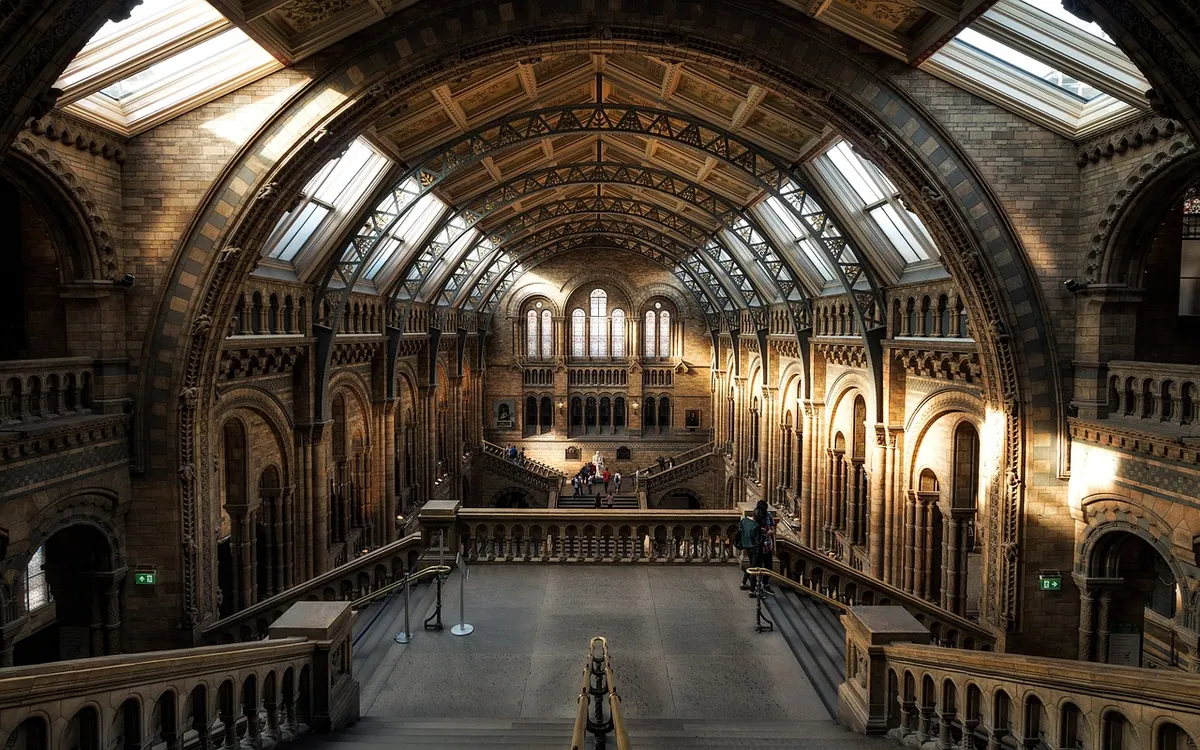
Two intersecting arcs producing a point — that's the Gothic arch. Structurally, it directs weight downward more steeply, which frees the walls to become thinner and the windows to become enormous. Run your eye along the arcade, the window tracery, the vault ribs. Points everywhere means Gothic.
Sainte-Chapelle in Paris is the extreme case: walls almost entirely replaced by glass. King's College Chapel in Cambridge shows the late English version, where ribs fan across the ceiling like something grown rather than built.
You will also meet buildings that mix the two, or a Gothic window punched into a Romanesque wall. Don't treat that as a problem. It's a story the building is telling, and it's worth a frame of its own.
Vaults and Ceilings: Where to Point the Lens
Look up. The ceiling is your second clue, and it usually rewards a dedicated shot.
- Barrel vault: a continuous round tunnel of stone. Romanesque. Long, even curves — good for symmetry, one-point perspective and leading lines that pull the eye to the far end.
- Groin vault: two barrel vaults crossing. Romanesque and early Gothic. The diagonal creases create a grid of X shapes above you.
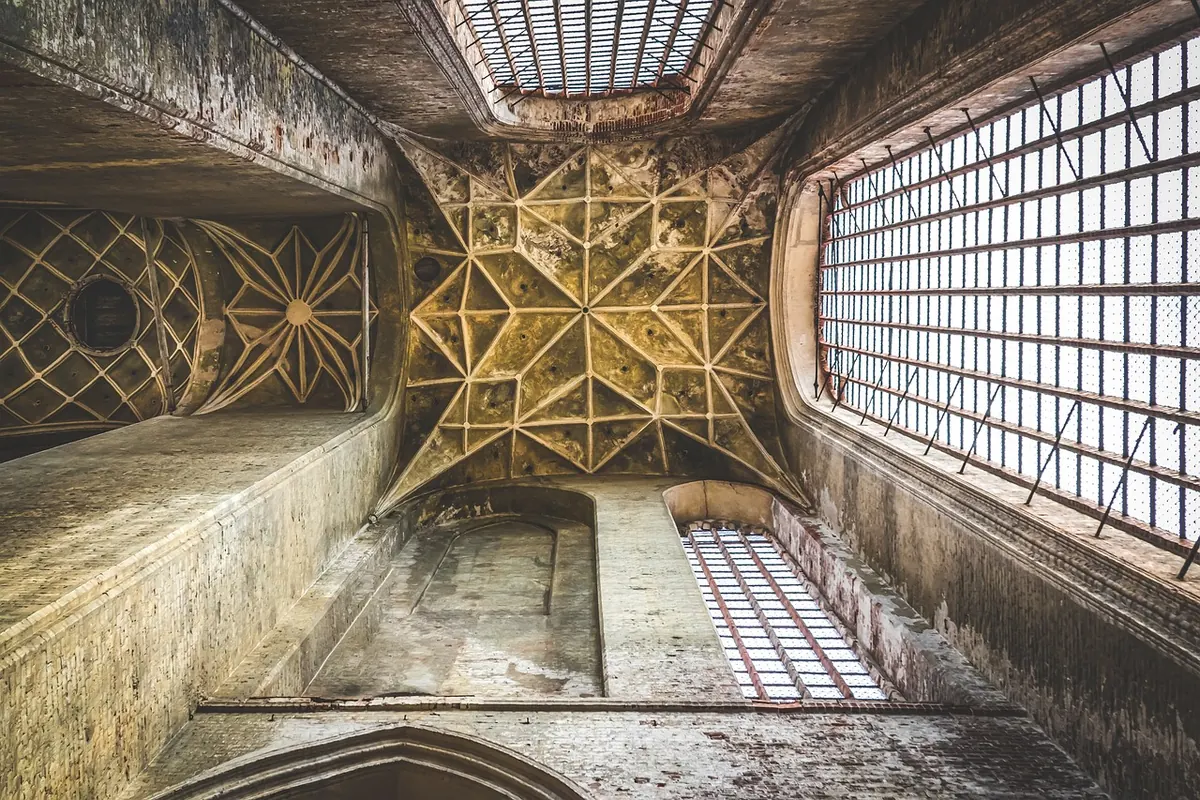
- Rib vault: visible stone ribs springing from columns and meeting at the crown. Gothic. These ribs are the strongest graphic element in most Gothic chapels — photograph them as pattern, not merely as ceiling.
- Fan vault: ribs spreading like an open fan, typical of late English Gothic. Hard to shoot badly, easy to shoot flatly. Get close under one bay and use the repetition.
One technical note: tilt a wide lens straight up and the verticals splay outward while the vault balloons. Sometimes that's the drama you want. If you'd rather keep the geometry honest, stand further back, use a longer focal length, or level the camera and crop.
Windows: Shape, Size, and How the Light Behaves
Window openings do more than date a building. They determine your exposure and your mood.
Romanesque windows are small, deeply splayed, often round-headed, sometimes no more than slits. The payoff is quiet, directional light and stone that holds its texture. The cost is slow shutter speeds. A tripod, or a camera braced on a pew back, is not optional if you care about detail.
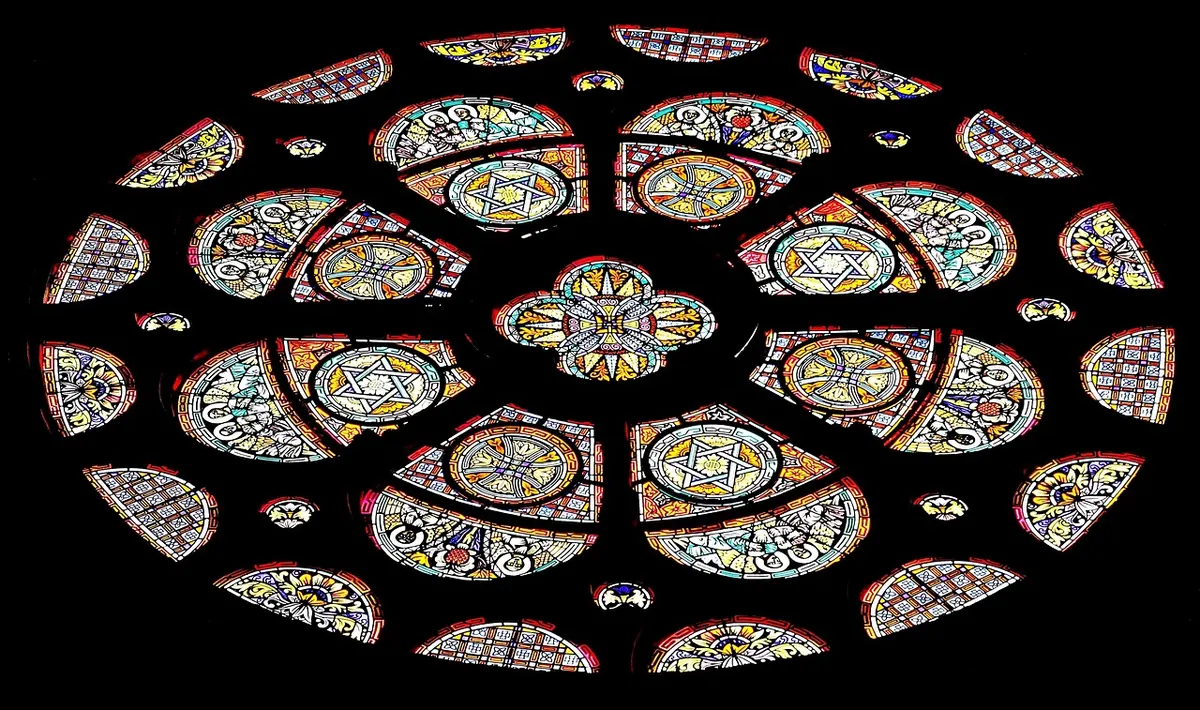
Gothic windows are tall, pointed and grouped, often filled with stained glass. Light becomes the subject. Here you have a choice: expose for the glass and let the interior fall to near-silhouette, or expose for the stone and accept blown-out windows. Both are legitimate. Decide before you press the shutter rather than splitting the difference and getting neither.
Watch the colour, too. Morning and late afternoon sun through medieval glass throws patches of red and blue across the floor. Those patches move fast. If you want them in the frame, arrive early and wait.
Reading a Chapel in Three Minutes
A quick walk-through will tell you what you're dealing with. Try this order:
- Stand at the entrance and look at the nearest arch. Round or pointed?
- Look up at the ceiling. Tunnel, ribs, or fan?
- Look at the windows. Small and deep-set, or tall and glazed?
- Check the walls. Thick and heavy, or thin between tall openings?
- Note the verticals. Does the space push upward, or spread outward?
- Find the main light. Which side, and where does it land on the floor?
That's usually enough. Heavy walls, small windows and round arches: Romanesque. Thin walls, huge windows, points and ribs climbing: Gothic.
Composition Choices by Style
Once you've read the building, the framing decisions get easier.
For Romanesque, lean into mass and horizontality. Shoot down the nave from a low position to make the piers feel heavier. Use repeated arches as a rhythm section. Get close to carved capitals — they're often cruder and more characterful than Gothic carving, and they photograph beautifully with a single light source.
For Gothic, lean into height and light. Vertical frames, wide lenses at floor level, and a deliberate decision about whether the windows are the subject or the backdrop. Symmetry pays off: centred, one-point compositions along the axis of the chapel are almost never wrong. Then break it once, off-centre, and see what happens.
Ask what the building is trying to do, then help it do that. A Romanesque chapel wants to feel solid; a Gothic one wants to feel weightless. Your exposure and framing should agree.
Practice on the Details
Spend one visit shooting only details: a single arch, a capital, a window head, a patch of rib vault. Ten frames, no wide shots. It's the fastest way to train your eye to date a building at a glance, and those detail images often end up being the ones people linger over.
Then go back and shoot the space. You'll already know where to stand.
Photo: Michael D Beckwith / Pexels