How to Photograph a Dark Chapel Interior Without a Tripod
Tripods are often banned in chapels, but dim naves are still photographable. Here's how to hold steady, set high ISO sensibly, and brace for sharp frames.
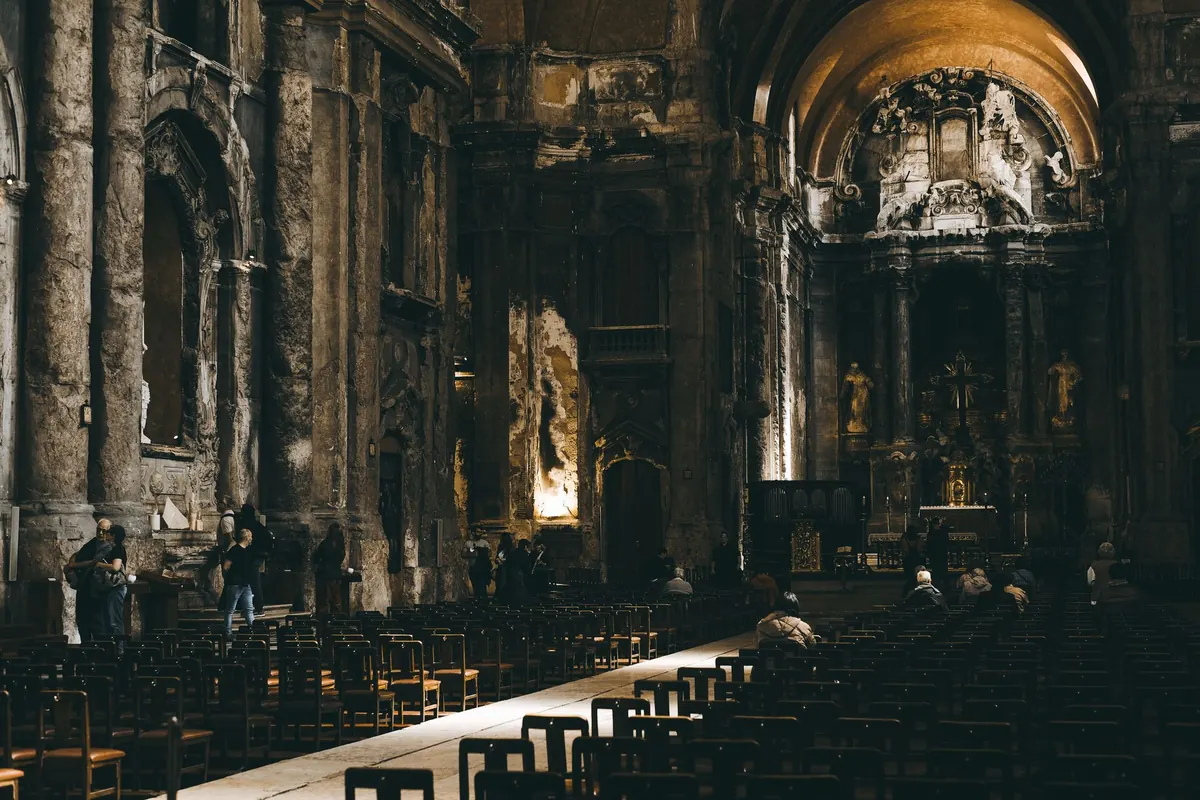
Chapel interiors are built to make you look up, not to make photography easy. The light arrives in narrow beams from clerestory windows, the stone drinks what's left, and the sign by the door usually says no tripods. You could walk away with nothing but blur. Or you could steady yourself, choose the right settings, and come home with frames that look like the place felt.
Why Hand-Holding Works Better Than You Expect
Modern sensors handle ISO 3200 and 6400 far better than the cameras most of us learned on. A slightly grainy photograph that is genuinely sharp will almost always beat a cleaner one ruined by movement. That changes the math inside a chapel: you are not fighting darkness so much as fighting shake.
There is a practical argument too. Tripods block aisles, scrape on flagstones, and draw attention during quiet hours. Even where they are allowed, setting one up takes two or three minutes and a small disturbance. Working handheld lets you drift through the space, kneel at a pew, step closer to a window, and leave before anyone notices you were there.
Set the Camera Before You Step Inside
Configure everything in daylight, because fiddling with menus in a dim nave wastes the calmest minutes of your visit. My default setup for a chapel:
- RAW capture, so white balance and shadow recovery stay flexible later.
- Aperture around f/2.8 to f/4. Wide enough to gather light, stopped down just enough to keep a nave reasonably crisp.
- Auto ISO with a minimum shutter speed of about 1/60 to 1/80 second. Let the camera raise ISO rather than drop the shutter.
- Image stabilization on, if your lens or body has it. Think of it as a useful extra stop, not a licence to shoot at 1/8 second.
- Single-point autofocus, aimed at a contrasty edge: a candle flame, a window frame, the lit rim of an altar. Autofocus hunts in flat darkness, so give it something to bite.
- Exposure compensation at minus a third to minus two-thirds, protecting bright windows from blowing out.
- Silent or electronic shutter where available, and the focus assist lamp switched off. Nobody wants a red grid projected onto a reredos mid-prayer.
Hold the Camera Like You Mean It
Stance matters more than gear. Feet a little wider than your shoulders. Elbows tucked against your ribs rather than flared out. The viewfinder pressed to your brow, left hand cupping the lens from underneath. Your body becomes the support.
Then breathe deliberately. Take a normal breath, let about half of it out, hold, and squeeze the shutter release rather than stabbing at it. Shoot a burst of three frames; the first is often lost to the press, and the second or third tends to be the keeper.
Two moves worth practising
First, the slow lean. Rather than standing and hoping, roll your weight from one foot to the other as you release. It sounds odd, but it stops the small sway that creeps in when you try to freeze completely. Second, shoot wide. A 24mm or 28mm lens tolerates hand-hold shake far better than a 70mm view, and a chapel's horizontal lines read well at wide angles.
Bracing Tricks When Tripods Are Banned
You do not need a tripod to find a third point of contact. You need architecture.
- Press your shoulder or upper back against a column. Flat, solid stone is ideal.
- Rest your forearms on a pew back, not the camera itself. Hard contact transmits vibration from the building, from the person shifting behind you, from the heating coming on.
- Use your bag as a pad. A camera bag or folded jacket on a pew, parapet or broad windowsill gives you a soft, stable rest for the lens.
- Make a string tripod. A metre of cord with a 1/4-inch bolt through it, screwed into the camera's socket, with your foot on the loop and the cord pulled taut, turns your legs into a monopod. It weighs nothing and packs flat.
- Kneel or sit. Lowering your centre of gravity and resting elbows on your knees is more stable than standing, and it puts you at the height of kneelers, hassocks and carved pew ends.
- Check the rules first. Many chapels permit a small tripod or monopod outside service times. A folding walking-stick monopod may pass where a full tripod will not, but ask rather than assume.
One caution: avoid leaning on anything that vibrates. Radiators, organ cases, sound desks and old pipework all transmit movement you cannot feel until you see the file. And keep your manners. If a service or private prayer is happening, put the camera down and come back. No photograph is worth interrupting someone's attention to the place you came to admire.
Reading the Light You Actually Have
Look for the sources before you look for subjects. High windows, stained glass, candles, a lit altar, an exit sign glowing green in a side aisle. Each behaves differently.
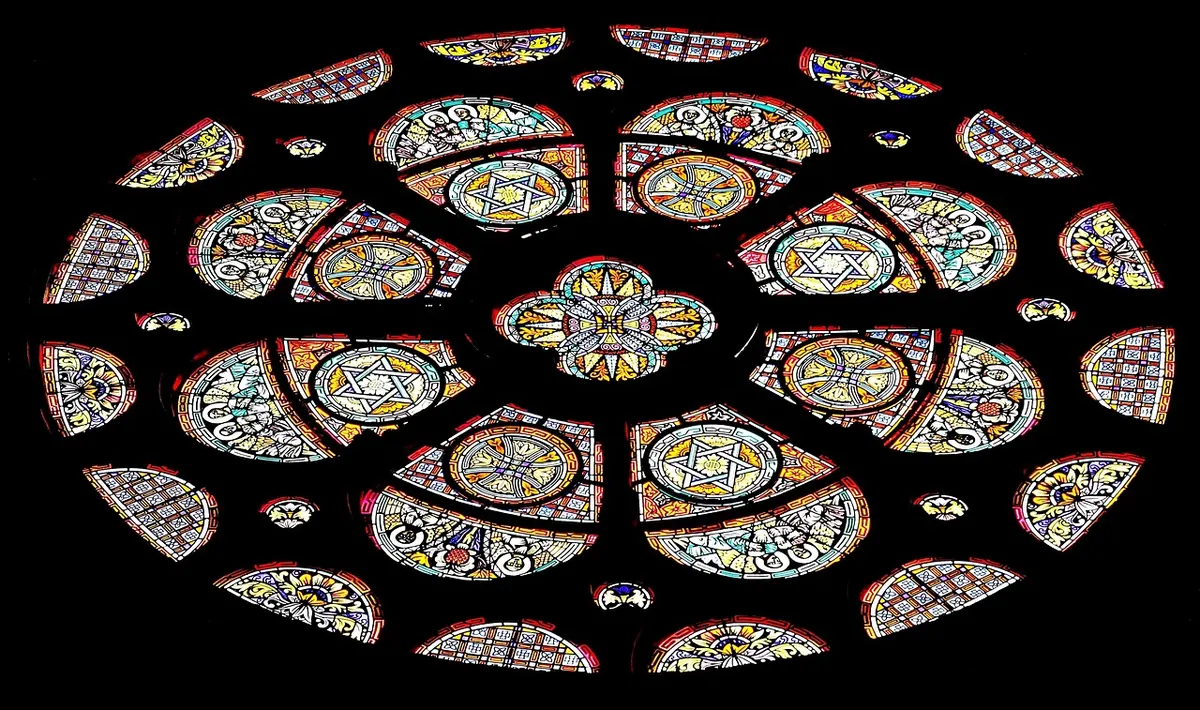
Decide what matters most. If you expose for a bright stained-glass window, the interior will drop almost to black and you will need to lift shadows considerably. If you expose for the stonework, the windows will clip to white. Bright highlights rarely recover; shadows usually do. When a scene really is too wide for one frame, bracket three exposures and blend them later, or simply accept the window as a glowing shape and let it be the subject.
If the chapel mixes daylight with candles and warm retrofitted lamps, leave white balance on auto, shoot RAW, and correct towards roughly 4000K afterwards. Mixed colour is part of the atmosphere. Do not scrub it all out.
Working With Noise Afterwards
Lift shadows gently. Apply luminance noise reduction to midtones and shadows before sharpening, then sharpen sparingly; heavy sharpening amplifies grain faster than any ISO setting. A little visible texture reads as film rather than fault, and a black-and-white conversion often suits dim chapels better than colour, turning uneven mixed lighting into tone.
Judge the result at normal viewing size, not at 200 percent on a monitor. Noise that looks alarming magnified usually disappears in print or on a page.
A Short Field Routine
- Pause just inside the door for thirty seconds. Let your eyes adjust before touching the camera.
- Check ISO, aperture, stabilisation, RAW and minimum shutter speed.
- Walk the space and find the light before you find the composition.
- Brace, breathe, squeeze off three frames.
- Glance at the histogram, not the screen, then adjust once and move on.
- Step quietly, watch stone floors and kneelers, and leave the room as you found it.
Hand-holding a dark chapel is a skill built from small habits: a braced shoulder here, a slower breath there, one honest look at the histogram. Practise in any dim building you can find, and the next time a chapel door opens onto that wonderful gloom, you will already know what to do.
Photo: Alina Chernii / Pexels